
There is a certain form of emotional pain that lies beneath Gina Zo’s new single “Fuck Me Then Leave Me.” Not a still pain (one that doesn’t make any noise) but the kind that burns, flickers, flares and won’t shut up, the type of pain you feel in your bones when it smells like beer and ash and you’re aware that you shouldn’t go back… but you do. Again.
The song is not about heartache—it is about addiction. To the person, to the chaos, to the energy that lives in between two people who should have broken up along time ago. Gina does not romanticize it; she exposes it. Every lyric feels lived in, every note raw, honest and intentional. When the chorus hits, you do not only hear it, you are part of it, shouting it like the confession you’ve been longing to say out loud.
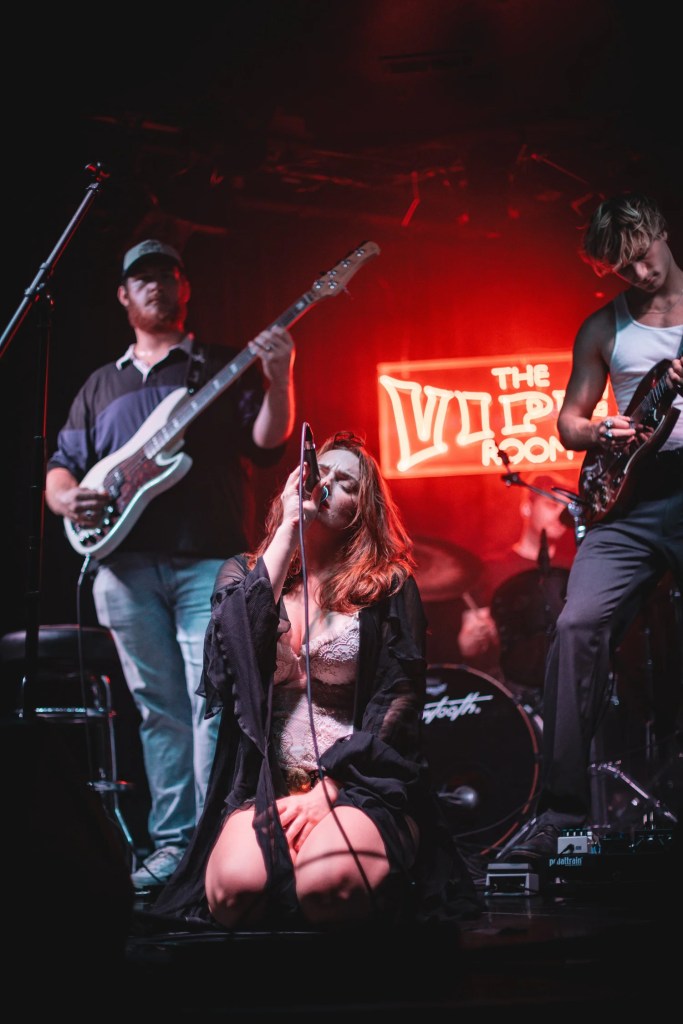
After successful tracks like “Dirty Habits” and “Only Bad Men Make Me Feel This Way,” Gina’s transition from reckless entertainment to catharsis as art is characterized by the power in her imperfection—unvarnished truthfulness underlined by extreme vulnerability. She isn’t indulging pain for a round of applause. She’s translating pain into song so no one is left alone in their own
With a childhood spent with flashlights-as-strobes and empty toilet paper rolls as microphones, the Philly transplant to LA firestorm gets that pulse of rock’s golden age with a renegade vision of modernity. Once coached by Gwen Stefani on The Voice, she learned right away that truth is louder than any hook and she has been turning that up ever since
Q: “Fuck Me Then Leave Me” is unapologetically raw—an anthem about addiction to the forbidden. When you write songs like this, do you see them as self-exorcism, performance, or both?
Gina Zo: “It is definitely a complete self-exorcism. I write out of a need to get things out of my head. The first draft is always a hodgepodge of the experience I’m going through. Then it becomes a bit of a performance for the audience, as I fix up the song to make sense for them. I’m often trying to make sure they will understand and feel deeply connected to it. So, a bit of both.”
Q: You’ve been compared to icons like Stevie Nicks while pulling inspiration from modern pop grit. Where do you see yourself in today’s rock-pop landscape?
Gina Zo: “That comparison always makes me smile—I’ve been dancing to her music since I was a little girl in my grandparent’s basement. As for my music, I want to break new ground while nodding to my favorite singers, performers, and writers. I want people to sing about what they’re going through but also realize they can dance, yell, and chant through anything.”
Her music nods to the past while carving a space that’s unmistakably her own—a delicate balance of nostalgia and innovation.
Q: The Voice gave you Gwen Stefani telling you to ‘be more genuine.’ Looking back, what did that conversation awaken in you? Would the Gina Zo of today recognize the Gina Zo of then?
Gina Zo: “The Gina Zo then would be mesmerized by who I am today. That advice awakened the search for who I am and how I can make sure people always know that in every lyric and performance. I strive to be that better version in everything I do.”
Q: Your trajectory has had detours—signing young, walking away, then returning with Velvet Rouge. What did the dark side of the industry teach you about survival?
Gina Zo: “It taught me that only the strong survive. You have to have thick skin and understand that not everyone is meant to work with you or listen to your music—and that’s okay. My armor is stubbornness, though I’ve had to learn to break down walls and process who is truly for me. If I control my own business, everything can go right.”
Q: There’s a tension in your music between vulnerability and power. Do your songs reconcile these two selves, or do you let them clash on purpose?
Gina Zo: “They clash because humans are complex. Some days I’m miserable and think, ‘I’ll never find my person.’ Other days I’m thrilled to be single and chasing my future self. That’s what makes me authentic—I give you every story. Some songs are reflective, others bold, but they’re all me.”
Q: Rock has historically been a boys’ club. When you walk on stage, do you feel like you’re battling the genre’s history—or rewriting its present?
Gina Zo: “I’m rewriting the present. I continue the work I started with Velvet Rouge because being a woman in rock means constantly fighting for recognition. I may intimidate some, but I’m caring about the future of every woman after me.”
Q: You’ve described bisexuality in your work not as a label but as rebellion against conformity. How does that shape your lyrics and your role as a frontwoman?
Gina Zo: “Sexuality is fluid. It shapes my lyrics because my stories may be about one person, but my feelings change day to day. I want people to feel free at my shows—to explore who they are in the moment and maybe leave as a different person.”
Q: Your songs sit between stadium sing-alongs and intimate confessions. What do you want listeners to get hooked on: chaos, catharsis, or honesty?
Gina Zo: “Catharsis. I want people addicted to letting go of who we think we are. My songs are anthems of release.”
Q: Your production collaborators—Justin Miller, Tim Sonnefeld—have heavy résumés. How do you balance their polish with your own instinct for grit and imperfection?
Gina Zo: “There’s a trust between us I’ve never experienced before. They challenge me but meet me with grace. I used to feel imposter syndrome, but they made me realize that nonsense has no place in the studio. I belong there.”
Q: The word ‘revolution’ is often used to describe your return. Is this more about cultural change or claiming your own inner territory?
Gina Zo: “It’s about personal freedom. The cultural movement I’m creating says it’s never too late to start over or start at all. There’s no right way to live—that’s my revolution.”
Q: Offstage, you cook, read murder novels, and stroll Silver Lake. Onstage, you’re fiery. Are these different personas, or part of the same creative hunger?
Gina Zo: “They’re the same person. I used to bring anger on stage, but now my personal joy fuels my performance. I’m just a happy 28-year-old who dances with friends—and that same energy explodes onstage.”
In “Fuck Me Then Leave Me,” Gina Zo isn’t asking for mercy or a way out. She is taking her agency back from the rubble; evidence that empowerment does not always come in shine. Sometimes the evidence smells like smoke and tastes like regret. And somehow, in her hands, it’s beautiful.
It’s not just a song. It’s an anthem for every soul that still can’t get callous, because they will feel the heat of the fire one day again.
 The Hollywood Six